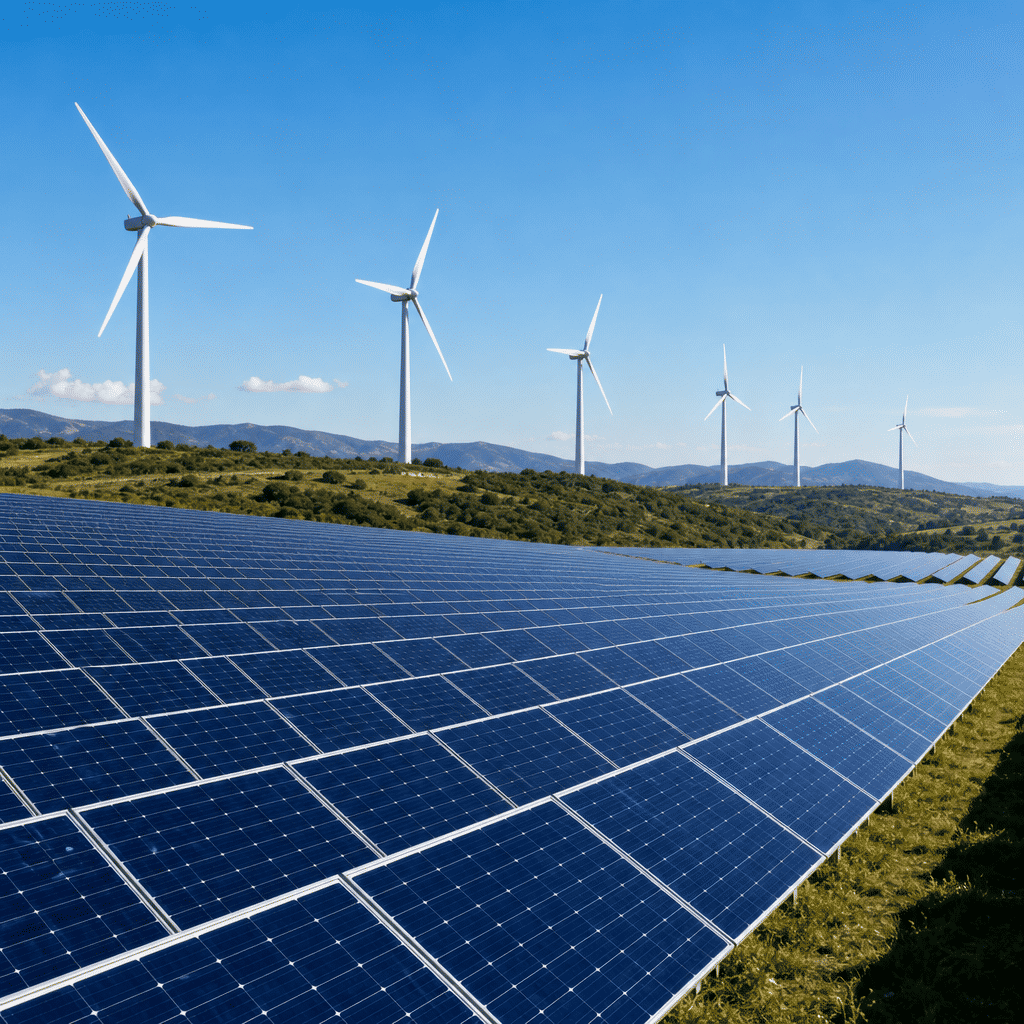
As global concerns about climate change continue to rise, the pursuit of sustainable energy sources has never been more urgent. Innovative research in renewable energy technologies is paving the way for a future where clean energy becomes the standard rather than the exception. Solar and wind energy, two of the most promising renewable resources, are experiencing groundbreaking advancements that promise to transform the way we power our world.
Solar energy has long been celebrated for its unlimited potential, driven by the sun's inexhaustible power. Recent innovations in solar technology focus on increasing efficiency and reducing costs to make solar power more accessible and practical for widespread use. One such breakthrough is the development of perovskite solar cells. These cells have shown remarkable potential in laboratory settings, achieving efficiency rates comparable to traditional silicon solar cells but with lower production costs. Researchers are exploring ways to enhance the stability and scalability of perovskite solar cells, which could dramatically lower the cost of harnessing solar energy.
Another promising advancement comes from the integration of solar technology into everyday surfaces. Building-integrated photovoltaics (BIPV) and transparent solar panels are paving the way for urban settings to generate their own energy. Skyscrapers covered with solar glass and residential homes equipped with solar roof tiles could become commonplace, turning cities into vast networks of energy producers. These developments not only reduce the carbon footprint but also bring us one step closer to energy self-sufficiency in urban areas.
Meanwhile, wind energy research is undergoing its own revolution. Traditional wind turbines are becoming more efficient, with enhancements in aerodynamics, materials, and turbine height. Offshore wind farms, in particular, are gaining traction due to their higher consistency in wind speeds and their ability to house larger turbines. For example, floating wind farms are expanding into deeper waters where winds are stronger and less obstructed by land features.
Moreover, advanced data analytics and machine learning are being employed to optimize wind farm layouts, predict maintenance needs, and improve real-time energy output management. These technologies ensure that wind energy systems are not only efficient but also reliable and customizable to varying environmental conditions.
Energy storage is another critical component in the transition to renewable energy, and significant progress is being made in this area as well. Emerging battery technologies, such as solid-state batteries and flow batteries, promise to store energy more efficiently and safely than traditional lithium-ion batteries. This development is crucial in addressing the intermittency challenges associated with solar and wind energy, providing a steady supply of power regardless of weather conditions.
Furthermore, the integration of renewable energy sources with smart grids enables better management of energy consumption and distribution. Smart grids use digital communication technology to detect and react to local changes in electricity usage, helping balance supply and demand more effectively. By incorporating renewables into these grids, countries can achieve a more resilient and adaptable energy infrastructure that minimizes waste and maximizes efficiency.
As these pioneering research efforts continue to evolve, collaboration across borders and industries will be key to achieving a sustainable energy future. Governments, academia, and the private sector must work in tandem to invest in research and development, streamline regulatory barriers, and incentivize the adoption of renewable technologies.
The future of renewable energy is bright, offering the promise of a cleaner, more sustainable planet. Through continued innovation and commitment, solar and wind technologies have the potential to tackle our most pressing environmental challenges, ensuring a legacy of stewardship and responsibility for generations to come.